The raccoon’s natural habitat is in wooded areas, especially near water. It is however able to do well in cities and suburbs, where it typically makes its den in trees. It is also known for making its den in caves, sewers and even in houses (attics and chimneys).
Raccoons are known to come out in the rain as water does not bother them anyway. They are good swimmers and they hunt for food both on land and in the water. Most of their activities are carried out at night and they move in all kinds of weather, except for harsh winter.
Whether a raccoon will venture out in rainfall also depends on the intensity of the rain. They have been known to take cover during a downpour, but will not be bothered by a light rainfall.
NEED LOCAL HELP? We have wildlife removal professionals servicing 95% of the USA. Click here to
hire a local raccoon removal expert in your home town. Updated 2026. But read the below advice first!\
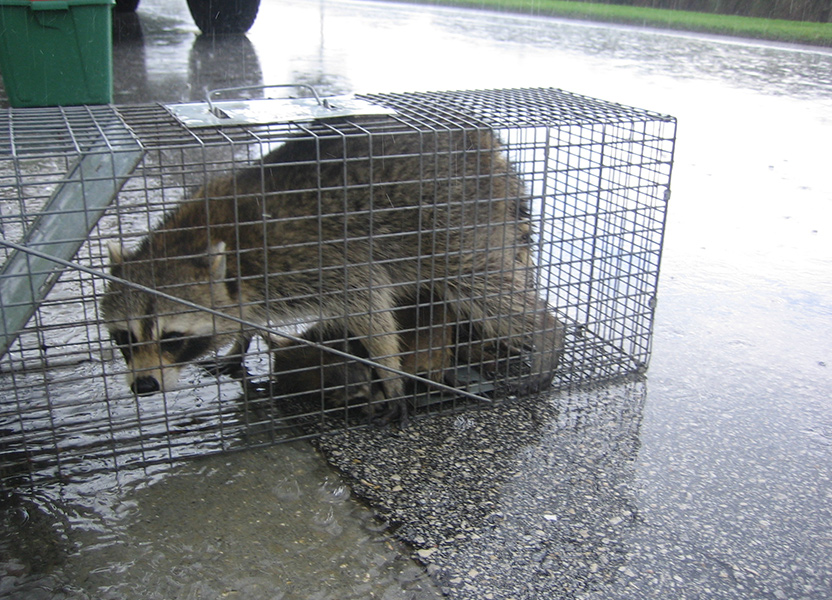
Another factor worthy of consideration is the extent of the raccoon’s need, usually hunger . A hungry raccoon will brave the conditions to go search for food, whether the rain be light or a heavy downpour.
It has been observed that rain storms and humidity don’t seem to affect the activity level of coons, nor do approaching storm fronts or different moon phases.
Prevention is the best way if you’re looking to keep raccoons off your property and here are some practical ways to go about proofing your yard against coons:
1. Ensure that garbage cans are sealed tight. A common sign of raccoon visits is an overturned garbage can and scattered trash. Raccoons are very deft in handling loose or broken lids. If your garbage must be left outside, use lids that lock into place with handles or clamps.
2. Do not leave pet food or leftovers outside at night. Feed your pets during the day and don’t leave their food bowls out for the raccoons to find. And clean up spilled bird seed around your bird feeder.
3. Block all potential entry points into your house or structure. Raccoons can get in via seams along roofs, baseboards, attic vents, and chimneys. Some people hire professionals to carry out a thorough inspection of houses and proof it against wildlife entry.
4. Remove any tree with long branches near your house to prevent easy roof access. Trim or remove any excess vegetation around your house or deck as they are potential cover and hiding places.
5. Ensure that your chimney is securely capped at all times
6. Animal proof your low decks and basement spaces for elevated houses.
To learn more about Do Raccoons Come Out In The Rain visit the Raccoons in the Attic home page.