Raccoons don't truly hibernate, but they enter a state of prolonged sleep and inactivity called Torpor. Hibernation is a survival strategy that animals adopt to stay alive during extreme cold weather and the ensuing food scarcity. During this period, the animal’s movement is partially or completely ruled out. They become totally or partially inert and they retire to a pre-planned spot or area until the cold winter period elapses.
In order to survive the rigors of hibernation and not starve to death, animals would store a huge volume of fat in their bodies ahead of time that can last them all through the hibernating period.
NEED LOCAL HELP? We have wildlife removal professionals servicing 95% of the USA. Click here to
hire a local raccoon removal expert in your home town. Updated 2026. But read the below advice first!\
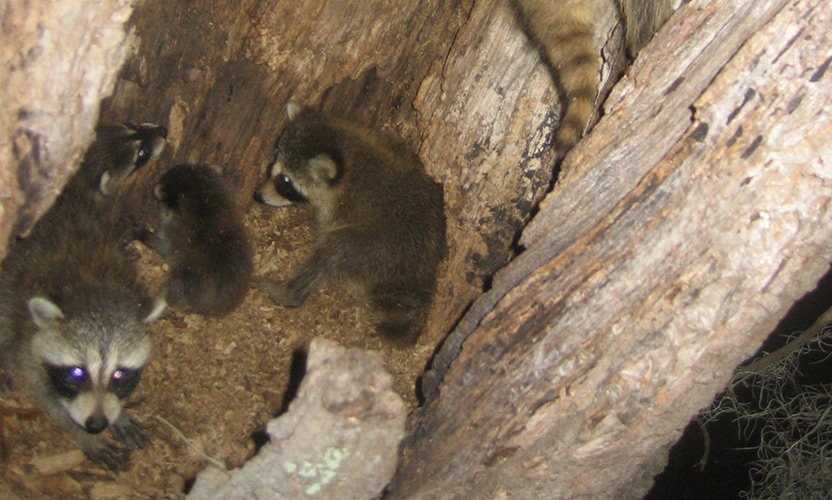
Torpor - The raccoon does not hibernate during winter, but it would curl up and sleep in its den for weeks at a stretch – a state known as torpor. Torpor significantly lowers the amount of energy that the animal needs to survive. Its body temperature lowers and the increased insulin production decreases its blood sugar.
Raccoons wake up on warmer days, and leave their dens for short periods to forage for food. In some southern states however, raccoons are active all winter but they adapt in several ways to survive the cold.
Besides being in the state of torpor, raccoons exhibit several behavioural and physical adaptations that keep them alive:
1. Opportunistic feeding
Raccoons are omnivores and can eat both plant and animal matter, food from garbage cans, etc. They basically eat anything that they can find in their environment and this works for them during winter. They mostly eat more of fruits, acorns, corn, insects, and small animals. Their ability to feed on whatever food is available in their environment means that a raccoon would rarely die of starvation, a common cause for death of animals in winter.
2. Storing up fat reserves
Raccoons build up fat stores in their bodies (mostly in the tail) in the summer and autumn months. This fat gets used up slowly over the course of winter as the animal combats starvation. A raccoon may lose up to 50 percent of its body weight before the end of winter, depending on the harshness of the weather.
3. Warm dens
They search for warm den sites like hollow trees and underground burrows, sometimes those of other animals. In extreme winters, raccoons have been known to share dens with other raccoons in order to share body heat.
4. Raccoons grow a thicker coat of fur to keep them warm in winter. This helps to trap in the body heat and insulate the animal’s body.
The ability to adapt in these physical and behavioural manners help the raccoon to survive even in harsh winters without hibernating.
To learn more about Do Raccoons hibernate visit the Raccoons in the Attic home page.